Experts Warned of Catastrophic Consequences of the “Experimental and Untested Design of the Titan”
For four days, the world was captivated by an intriguing and shocking story: the disappearance of the tourist submarine Titan. Or rather, submersible. The vessel carrying five crew members to view the wreckage of the famed doomed ship, Titanic, has been on the screens of millions of people around the world. Although we all wished for an epic miracle outcome, the results were not as expected. The ship was not located within the 96 hours of oxygen available to them. However, the most convoluted part of this story is its disturbing context, which led to the five families’ misfortune. Most likely, the families of the Titan submarine victims will file a lawsuit against the manufacturer for wrongful death.
Leaving aside the cause of death, which will be investigated in the coming months -although it has already been confirmed that they died by implosion, the question many of us are asking is: whose fault is it? Could the incident have been avoided? What safety measures were in place in case of an accident? As we will see below, several experts and previous participants of the expedition claim that the ship’s construction was precarious and defective.
In addition to the defects, former passengers on the submersible have corroborated that the company forces each person on board to sign a liability waiver to cover injury or death. But, to what extent can a company walk away unscathed from a fatal accident when knowing that its product is defective and puts lives at risk? This blog examines this story from a personal injury perspective. Read on if you don’t want to miss out on the legal intricacies surrounding one of the most famous maritime catastrophes of all time.
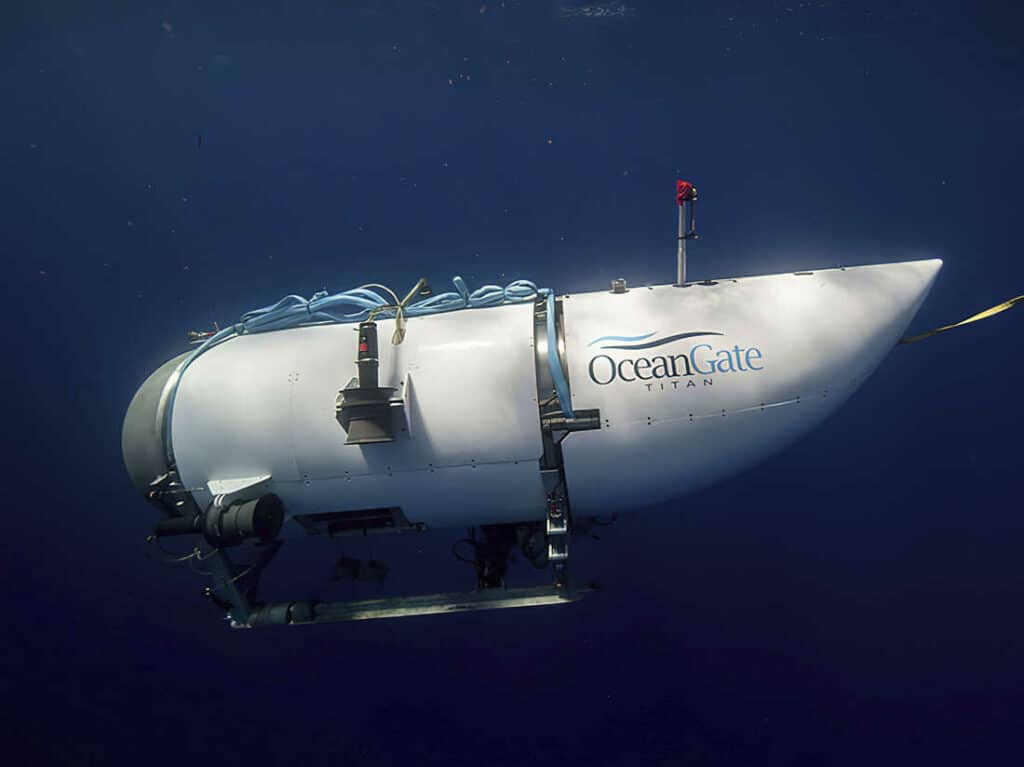
For four harrowing days in June 2023, the world watched as rescue teams desperately searched for the Titan submersible and its five passengers. The vessel, operated by OceanGate Expeditions, had lost communication during a descent to view the Titanic wreckage 13,000 feet below the ocean’s surface. Each passenger had paid $250,000 for the expedition, signing extensive liability waivers acknowledging the “experimental” nature of the craft and the possibility of death.
When debris from the Titan was finally discovered, investigators confirmed the worst: a catastrophic implosion had killed all five people aboard instantly. Among the dead were OceanGate CEO Stockton Rush, British billionaire Hamish Harding, Pakistani businessman Shahzada Dawood and his teenage son Suleman, and French Titanic expert Paul-Henri Nargeolet. The tragedy sparked immediate questions about corporate responsibility, safety protocols, and whether liability waivers could shield OceanGate from accountability.
This comprehensive legal analysis examines whether the families of Titan submarine victims can successfully sue OceanGate despite the liability waivers passengers signed, explores the legal doctrines of duty of care and gross negligence, and explains what wrongful death claims might look like in this unprecedented maritime disaster.
Key Takeaways
- Liability waivers do not protect companies from lawsuits when gross negligence or willful misconduct causes deaths.
- OceanGate owed its passengers a legal duty of care that required implementing reasonable safety measures regardless of the waivers signed.
- The Titan submersible was never certified by regulatory bodies and operated as an admitted “experimental” vessel.
- Former employees and industry experts repeatedly warned OceanGate about safety deficiencies before the fatal implosion.
- Wrongful death claims can seek compensation for economic losses, pain and suffering, and punitive damages in cases of extreme negligence.
- Working with an experienced Los Angeles personal injury lawyer specializing in wrongful death and maritime law is essential for navigating these complex claims.
Understanding the Titan Submarine Disaster
Before analyzing potential legal liability, it’s essential to understand exactly what happened during the Titan’s final voyage and the safety concerns that preceded it.
The Final Voyage: Timeline of Events
On Sunday, June 18, 2023, the Titan submersible prepared to begin its descent to the Titanic wreckage at approximately 6:00 a.m. The vessel carried five people: pilot and OceanGate CEO Stockton Rush, British businessman Hamish Harding, Pakistani entrepreneur Shahzada Dawood, his 19-year-old son Suleman Dawood, and French maritime expert Paul-Henri Nargeolet.
The expedition required descending approximately 4,000 meters (13,000 feet) to reach the Titanic wreckage on the ocean floor. The typical voyage lasted approximately eight hours, divided into two and a half hours for descent, three hours exploring the wreck site, and two and a half hours ascending back to the surface. The submersible carried 96 hours of emergency oxygen supply.
Approximately 1 hour and 45 minutes after the descent began, at around 9:00 a.m., the Titan lost communication. Inexplicably, the support crew did not alert the U.S. Coast Guard until after 5:00 p.m.—more than eight hours after losing contact. This delay would prove critical as rescue efforts mobilized.
Over the following days, an international search and rescue operation deployed ships, aircraft, and underwater robots searching for the missing submersible. Experts speculated about various scenarios: the vessel might be stranded on the ocean floor, trapped in wreckage, or suffering life support failures. Families clung to hope that the 96-hour oxygen supply might sustain their loved ones until rescue.
On June 22, 2023—five days after the Titan disappeared—OceanGate issued a devastating statement confirming that debris found near the Titanic wreckage indicated the submersible had suffered a catastrophic implosion. Officials presumed that all five passengers died instantly when extreme pressure caused the vessel’s hull to fail.
The Experimental Vessel and Its Design Flaws
The Titan submersible was constructed using an unconventional combination of titanium and carbon fiber, materials chosen to withstand the crushing pressure of 400 atmospheres at extreme depths. However, the vessel’s design and construction raised serious concerns among maritime safety experts.
The submersible was controlled using a modified Logitech wireless game controller—the same type sold for consumer video gaming. Ascent and descent functions operated through a single button. Most troublingly, the Titan lacked standard navigation systems, including radar and GPS. Instead, it relied on text messages sent from the surface ship for positioning information.
OceanGate openly acknowledged the Titan as “experimental” and admitted it had never been approved or certified by any regulatory body. The company operated the vessel in international waters, claiming this freed them from having to meet any nation’s safety standards. This regulatory vacuum allowed OceanGate to bypass the rigorous testing and certification processes that govern most commercial submersibles.
The passenger viewport presented another critical safety issue. Although the Titan could descend 4,000 meters, its acrylic window could withstand pressure only to 1,300 meters. Despite knowing this discrepancy, OceanGate refused to pay the manufacturer to produce a viewport certified for the vessel’s actual operating depth—a cost-cutting decision that directly compromised passenger safety.
Similar to defective design issues in other high-profile cases, the Titan’s construction prioritized innovation and cost savings over proven safety engineering.
Industry Warnings and Safety Concerns
The maritime industry had been warning OceanGate about safety deficiencies for years before the fatal implosion. In 2018, approximately 38 experts from the Marine Technology Society sent a signed letter to OceanGate expressing grave concerns about the company’s approach to deep-sea exploration.
The letter specifically criticized OceanGate’s “experimental approach” and warned that the Titan submersible did not meet established safety standards. The experts predicted that OceanGate’s reckless methodology could lead to “serious consequences for everyone in the industry”—a prophetic warning that would tragically prove accurate.
Beyond external criticism, internal dissent also emerged. David Lochridge, OceanGate’s Director of Marine Operations, compiled a negative quality control report about the Titan in 2018. Lochridge expressed concerns about the need for additional testing to detect potential pressure-related failures. When he refused to approve the vessel as safe, OceanGate fired him.
Lochridge subsequently filed a wrongful termination lawsuit in federal court in Seattle, alleging he was dismissed after raising legitimate safety concerns about the experimental submersible. He argued that passengers faced extreme danger in an unproven vessel descending to deadly depths. OceanGate countersued for breaching confidentiality agreements, and the parties eventually settled the case on undisclosed terms.
Previous Passengers Report Technical Failures
The Titan had successfully reached the Titanic wreckage only twice before its fatal third voyage. However, dozens of attempted dives were aborted due to technical malfunctions and communication failures—a pattern that should have prompted serious safety reviews.
CBS journalist David Pogue, who participated in a previous Titan expedition, described the experience as concerning. During his dive, the submersible became lost for two hours when communications failed. “We were lost for two hours. Communication somehow broke down, and the submersible never made it to the Titanic,” Pogue reported. He described the vessel’s interior as “experimental and amazingly basic,” noting that some components appeared “improvised” and unprofessional.
Mike Reiss, a writer for The Simpsons who had boarded OceanGate submersibles four times, confirmed that communication failures occurred during each of his dives. While Reiss claimed he was not afraid during these incidents, the consistent pattern of technical problems should have served as clear warnings that the Titan’s systems were unreliable.
These reported failures mirror incidents in other contexts where repeated safety complaints go ignored until tragedy strikes.
OceanGate’s Reckless Safety Philosophy
Perhaps the most damning evidence in any potential lawsuit would be CEO Stockton Rush’s own statements about safety. During a 2022 podcast appearance, Rush openly dismissed safety concerns as obstacles to innovation. He stated that investing heavily in safety measures was “pure waste” and encouraged adventurers not to over-analyze risks.
“If you just want to be safe, don’t get out of bed, don’t get in your car, don’t do anything,” Rush stated. “At some point, you’re going to take some risk, and the truth is, it’s a risk-reward question.” This cavalier attitude toward passenger safety, combined with cost-cutting on critical components like the viewport, would likely prove highly damaging in wrongful death litigation.
Understanding Liability Waivers and Legal Disclaimers
OceanGate required all Titan passengers to sign extensive liability waivers before boarding. Understanding these documents and their legal limitations is crucial to evaluating potential wrongful death claims.
What Is a Liability Waiver?
A liability waiver, also called a release of liability or assumption of risk agreement, is a legal document where participants acknowledge the inherent dangers of an activity and agree not to hold the company responsible for injuries or deaths that may occur. By signing these waivers, individuals legally assume the risks associated with the activity.
The OceanGate waiver was particularly explicit and comprehensive. According to Mike Reiss, who signed the waiver multiple times, the word “death” appeared at least three times on just the first page. The document specifically stated: “This experimental vessel has not been approved or certified by any regulatory body, and could result in physical injury, emotional trauma, or death.”
Liability waivers are common for activities involving inherent risks such as skydiving, rock climbing, scuba diving, and extreme sports. These documents serve legitimate purposes when properly used. They ensure that participants understand the risks and can make informed decisions about participating, while also protecting businesses from liability for injuries resulting from the inherent risks of the activity.
The Limits of Liability Waivers
However, liability waivers are not absolute shields protecting companies from all legal responsibility. California and most other jurisdictions recognize important limitations on when these waivers can be enforced. Courts will not uphold waivers that attempt to excuse gross negligence, willful misconduct, or reckless disregard for safety.
The key distinction lies between injuries caused by inherent risks of an activity versus injuries caused by a company’s negligence or misconduct. For example, a scuba diving company cannot be sued if a participant suffers decompression sickness from ascending too quickly despite following proper protocols—that’s an inherent risk of the activity. However, the same company could face liability if they provided defective equipment they knew was faulty or failed to maintain boats properly, causing injuries.
Liability waivers protect companies from accidents arising from risks that exist even when reasonable safety measures are implemented. They do not protect companies from liability when they fail to implement basic safety measures, ignore known hazards, or engage in reckless conduct that creates unnecessary dangers beyond the activity’s inherent risks.
The Doctrine of Duty of Care
Regardless of what liability waivers say, companies owe customers a legal duty of care—a fundamental principle in tort law that cannot be waived away through contractual agreements.
What Is Duty of Care?
Duty of care is a legal obligation requiring individuals and companies to act with reasonable care to avoid causing harm to others. This duty exists as a matter of law and continues regardless of whether liability waivers were signed. Companies must implement reasonable safety measures, maintain equipment properly, follow industry standards, and warn customers about known dangers.
In the OceanGate context, the company owed its passengers a duty of care requiring implementation of reasonable safety protocols, proper vessel maintenance, adherence to maritime industry standards, thorough pre-dive safety checks, and honest disclosure about the vessel’s limitations and known problems.
The duty of care standard is objective, measured against what a reasonable company in similar circumstances would do to protect customer safety. Courts examine whether companies took precautions that reasonable businesses in their industry would take under similar circumstances.
When Duty of Care Is Breached
A breach of duty of care occurs when companies fail to meet the reasonable standard of care required by law. Evidence suggesting OceanGate breached its duty of care includes operating an uncertified experimental vessel in one of the most dangerous environments on Earth, ignoring industry expert warnings about safety deficiencies, using a viewport certified for only one-third of the vessel’s operating depth, failing to address repeated communication and technical failures, dismissing fired employees’ safety concerns, and publicly stating that investing in safety was “pure waste.”
The systematic nature of these failures suggests not only negligence, but also gross negligence or willful misconduct. These are legal standards that render liability waivers invalid.
Can Victims’ Families Sue Despite Signed Waivers?
The central legal question families of Titan victims face is whether they can pursue wrongful death claims despite the liability waivers their loved ones signed before boarding. The answer is almost certainly yes, based on established legal principles.
The Gross Negligence Exception
Liability waivers become void and unenforceable when companies engage in gross negligence. According to Cornell Law School, gross negligence means “a lack of care that demonstrates reckless disregard for the safety or life of others.” This standard exceeds ordinary negligence and approaches willful misconduct.
Gross negligence involves conscious and voluntary disregard of the need to use reasonable care, likely to cause foreseeable grave injury or harm. It represents an extreme departure from ordinary care standards in situations where a high degree of danger is apparent.
Evidence that could establish gross negligence in the Titan disaster includes knowingly using a viewport certified for only one-third of operating depth, continuing operations after industry experts specifically warned about serious safety deficiencies, ignoring internal safety reports from qualified employees, experiencing repeated technical and communication failures without addressing root causes, and the CEO publicly dismissing safety investments as wasteful.
Proving Gross Negligence in the Titan Case
In order to successfully sue despite the liability waivers, families must demonstrate that OceanGate’s conduct rose to the level of gross negligence or willful misconduct. Based on the available evidence, there are several arguments that support this claim.
- First, OceanGate had actual knowledge of serious safety deficiencies through the 2018 industry expert letter, David Lochridge’s internal safety report, and repeated technical failures during previous dives. Despite this knowledge, the company continued operating the Titan without addressing fundamental design flaws.
- Second, the company made conscious decisions prioritizing profit over safety, exemplified by refusing to pay for a properly certified viewport and Rush’s public statements dismissing safety concerns. These weren’t oversights or mistakes—they were deliberate choices to proceed with known risks.
- Third, the gap between the Titan’s actual capabilities and accepted industry standards was enormous. Most commercial submersibles undergo extensive testing and certification. The Titan operated completely outside regulatory oversight, with OceanGate actively avoiding the certifications that might have identified fatal design flaws.
Finally, the nature of the activity—descending to lethal depths in an experimental vessel—required the highest degree of care, not the dismissive attitude Rush exhibited. When the stakes are life-and-death, courts expect extraordinary rather than minimal safety measures.
Similar Cases Where Waivers Were Voided
Courts have voided liability waivers in numerous cases involving gross negligence or willful misconduct. In amusement park accidents where operators knew of equipment defects but continued operation, waivers were deemed unenforceable. Similar outcomes occurred when skydiving companies provided defective equipment despite knowing of problems, adventure tour operators ignored weather warnings, leading to deaths, and gyms used equipment with known defects, causing serious injuries.
The legal principle remains consistent: while waivers protect companies from inherent activity risks, they cannot shield businesses that consciously disregard safety or create unnecessary dangers through reckless conduct.
Potential Legal Claims Against OceanGate
Families of Titan submarine victims can pursue multiple legal theories in wrongful death litigation against OceanGate and potentially other parties.
Wrongful Death Claims
Wrongful death claims allow surviving family members to seek compensation when a person dies due to another party’s wrongful act, neglect, or default. In California and most jurisdictions, wrongful death claims can be brought by surviving spouses, domestic partners, children, and other dependent family members.
To succeed in wrongful death claims, plaintiffs must prove that OceanGate owed the deceased passengers a duty of care, breached that duty through negligent or reckless conduct, the breach directly caused the deaths, and surviving family members suffered damages as a result.
Given the extensive evidence of safety violations, ignored warnings, and reckless corporate decisions, establishing these elements appears straightforward in the Titan case. The challenge will lie in overcoming jurisdictional issues related to the accident occurring in international waters and navigating maritime law complexities.
Similar to other high-profile wrongful death cases, the damages in the Titan submarine lawsuit could be substantial, given the egregious nature of OceanGate’s conduct.
Product Liability Claims
The Titan submersible itself constitutes a defective product that caused deaths. According to product liability law, manufacturers are strictly liable for defects in their products that cause injuries or deaths. Families could pursue claims based on manufacturing defects, design defects, and failure to warn.
Manufacturing defect claims would argue that the Titan was not constructed according to proper specifications or industry standards, particularly regarding the viewport and other critical components. Design defect claims would contend that the Titan’s fundamental design was unreasonably dangerous, lacking basic safety features that could have prevented the tragedy.
Failure to warn claims would focus on OceanGate’s inadequate disclosure about the vessel’s true risks, limitations, and history of technical failures. While the waiver mentioned the vessel was experimental, it may not have fully conveyed the extent of known safety deficiencies and the company’s conscious decisions to proceed despite warnings.
Negligence and Gross Negligence Claims
Beyond wrongful death and product liability theories, families can assert direct negligence claims against OceanGate for failing to exercise reasonable care in operating the Titan expeditions. Evidence supporting negligence includes inadequate training and safety protocols, failure to properly maintain and inspect the vessel, continuing operations despite known technical problems, and ignoring expert and employee safety warnings.
As discussed, this evidence suggests that OceanGate’s conduct exceeds ordinary negligence and potentially constitutes gross negligence. This would support punitive damage claims and render the liability waivers invalid.
Corporate Recklessness and Punitive Damages
When companies engage in particularly egregious misconduct showing conscious disregard for human safety, courts can award punitive damages beyond compensatory damages. These damages punish wrongdoers and deter similar conduct by others.
Stockton Rush’s statements dismissing safety as “pure waste,” combined with the systematic ignoring of warnings and cost-cutting on critical safety components, could support substantial punitive damage awards if plaintiffs can demonstrate these facts to a jury.
Damages Recoverable in Titan Wrongful Death Cases
If families successfully sue OceanGate, they can seek various types of compensation for the losses they suffered due to the death of their loved ones.
Economic Damages
Economic damages compensate for quantifiable financial losses, including lost financial support the deceased would have provided to family members over their lifetime, funeral and burial expenses, medical costs if the victims suffered before death, loss of benefits such as health insurance and retirement contributions, and loss of inheritance the deceased would have accumulated and passed to heirs.
For successful businessmen like Shahzada Dawood and Hamish Harding, economic damages could reach millions of dollars based on their earning potential over their expected lifespans. Young Suleman Dawood’s case presents unique challenges since he had not yet established earnings, though courts allow recovery for lost potential earnings and support.
Non-Economic Damages
Non-economic damages compensate for intangible losses that don’t have clear monetary values but profoundly impact surviving family members. These include loss of love, companionship, and emotional support, loss of guidance, advice, and parental care for surviving children, emotional distress and mental anguish suffered by family members, and loss of consortium for surviving spouses.
California and most jurisdictions don’t cap non-economic damages in wrongful death cases, allowing juries to award amounts they deem appropriate based on the unique circumstances of each case and the severity of loss suffered.
Punitive Damages
As discussed, OceanGate’s conduct may warrant punitive damages designed to punish egregious wrongdoing and deter similar conduct. The company’s systematic disregard for safety warnings, cost-cutting on critical components, public dismissal of safety concerns, and operation of an admittedly experimental vessel without proper testing or certification could all support substantial punitive awards.
In wrongful death cases, punitive damages can exceed compensatory damages by orders of magnitude, especially when corporate recklessness causes multiple deaths. These awards send a powerful message that profits cannot trump human safety.
Challenges in Suing OceanGate
While the legal case against OceanGate appears strong, families pursuing wrongful death claims will face several significant challenges.
Jurisdictional and Maritime Law Issues
The Titan disaster occurred in international waters approximately 900 miles east of Cape Cod, Massachusetts, complicating jurisdictional questions. Multiple legal frameworks could potentially apply, including U.S. maritime law, international maritime conventions, the law of the vessel’s flag state, or the law of the passengers’ home countries.
Maritime law differs significantly from standard personal injury law in important respects. The Death on the High Seas Act (DOHSA) governs wrongful death claims for accidents occurring beyond three nautical miles from U.S. shores. DOHSA traditionally limited damages to economic losses, excluding non-economic damages like pain and suffering. However, recent amendments have expanded available damages in some circumstances.
Determining which jurisdiction’s laws apply and navigating complex maritime legal principles will require attorneys with specialized expertise in admiralty law—an additional barrier for grieving families.
OceanGate’s Corporate Structure and Assets
OceanGate Expeditions suspended all exploration and commercial operations following the disaster. If the company lacks sufficient assets or insurance coverage to satisfy potential judgments, families may face challenges collecting damages even if they win lawsuits.
Attorneys will need to investigate OceanGate’s corporate structure, insurance policies, assets, and potential liability of individual officers and directors. If the company declares bankruptcy or dissolves, recovering damages becomes significantly more difficult.
Comparative Fault and Assumption of Risk Defenses
Even with strong evidence of gross negligence, OceanGate will likely assert defenses attempting to reduce or eliminate liability. The company may argue that passengers assumed the risks by signing comprehensive waivers and paying substantial sums to participate in an admittedly experimental and dangerous activity.
Defense attorneys will emphasize that passengers were sophisticated, wealthy individuals capable of understanding risks they voluntarily accepted. They may introduce evidence of the extensive waiver language and argue that passengers received adequate warnings.
However, these defenses face significant weaknesses. As discussed, gross negligence voids liability waivers. Additionally, the assumption of risk traditionally applies only to inherent activity risks, not risks created by the company’s own negligence or misconduct. Passengers assumed the inherent dangers of deep-sea exploration, not the dangers created by using an improperly certified viewport or ignoring expert safety warnings.
International Legal Complications
The Titan carried passengers from multiple countries, including the United States, the United Kingdom, France, and Pakistan. This international dimension creates additional complications regarding which nation’s courts have jurisdiction, which laws apply, whether families can pursue claims in multiple jurisdictions, and how judgments from one country might be enforced in others.
Coordinating international litigation involving multiple legal systems while families grieve their losses adds substantial complexity to already challenging cases.
Lessons From the Titan Disaster
Beyond the immediate legal questions facing victims’ families, the Titan tragedy offers important lessons about corporate responsibility, regulatory oversight, and consumer protection.
The Danger of Regulatory Gaps
The Titan disaster exposed dangerous gaps in maritime safety regulation. By operating in international waters with an experimental vessel, OceanGate avoided oversight that might have prevented the tragedy. The lack of mandatory certification requirements for submersibles allowed the company to proceed with an unsafe design that would likely have failed certification processes.
This regulatory vacuum raises questions about whether international maritime law needs strengthening to ensure all commercial vessels meet minimum safety standards regardless of where they operate. The tragedy demonstrates that voluntary industry standards prove insufficient when companies prioritize profit over safety.
Corporate Accountability for Experimental Ventures
The Titan case highlights the tension between innovation and safety in commercial ventures involving experimental technology. While innovation requires some risk-taking, companies cannot use “experimental” labels as excuses for recklessness or as shields against liability.
Stockton Rush’s philosophy that safety investments represented “pure waste” exemplifies dangerous thinking in which profits and ego trump responsibility for customer welfare. The disaster demonstrates why strong legal accountability through wrongful death litigation serves essential purposes in deterring similar corporate recklessness.
The Importance of Whistleblower Protection
David Lochridge’s firing after raising safety concerns exemplifies the retaliation whistleblowers often face when questioning corporate practices. His warnings, if heeded, could have prevented the Titan tragedy. Instead, OceanGate silenced dissent through termination and litigation.
Stronger whistleblower protections and mandatory reporting systems for safety concerns in high-risk industries might prevent future tragedies. Employees witnessing dangerous practices need viable avenues to raise concerns without fear of losing their livelihoods.
Consumer Protection in Extreme Adventure Tourism
The growing extreme adventure tourism industry—including deep-sea exploration, space tourism, and high-altitude expeditions—operates with limited regulation. The Titan disaster may prompt lawmakers to examine whether additional consumer protections are needed for activities involving extraordinary risks.
Balancing individual freedom to accept risks with ensuring companies provide honest, complete information about dangers remains challenging. However, at a minimum, regulatory frameworks should prevent companies from operating vessels that systematically fail to meet industry safety standards.
Similar issues arise in other contexts, such as tour bus accidents, where safety violations contribute to injuries and deaths.
Frequently Asked Questions
Can Families Sue if Their Loved Ones Signed Liability Waivers?
Yes. Liability waivers do not protect companies from liability when their conduct constitutes gross negligence, willful misconduct, or reckless disregard for safety. Courts consistently void waivers in cases where companies consciously ignored known dangers or failed to implement basic safety measures. Given the extensive evidence that OceanGate knew about safety deficiencies but continued operating the Titan, families have strong arguments that the waivers should not be enforced.
What Is the Difference Between Negligence and Gross Negligence?
Negligence involves failing to exercise reasonable care, resulting in harm to others. It represents carelessness or mistakes. Gross negligence involves conscious and voluntary disregard of the need to use reasonable care, likely causing foreseeable grave injury or harm. It represents reckless conduct approaching willful misconduct. The distinction matters because liability waivers typically protect against ordinary negligence claims but become void when gross negligence or willful misconduct causes injuries or deaths.
How Long Do Families Have To File Wrongful Death Lawsuits?
Statutes of limitations for wrongful death claims vary by jurisdiction and are complicated in the Titan case due to the accident occurring in international waters. In California, wrongful death claims generally must be filed within two years. However, maritime law may impose different deadlines. Families should consult attorneys immediately to ensure claims are filed within applicable time limits, as missing deadlines permanently bars legal action.
Can Families Sue Parties Other Than OceanGate?
Potentially yes. In addition to OceanGate, other potentially liable parties might include the viewport manufacturer if the improperly certified window contributed to the implosion, component manufacturers who supplied other defective parts, the vessel designer or engineer if design flaws caused the failure, and any third-party maintenance or inspection companies who failed to identify safety issues. A thorough investigation by experienced maritime attorneys will identify all potentially responsible parties.
What Role Did the Coast Guard’s Delay Play in the Tragedy?
While the catastrophic implosion likely killed all passengers instantly, making rescue impossible regardless of response time, the eight-hour delay in notifying the Coast Guard after losing communication raises questions.
Families might investigate whether this delay violated protocols and whether earlier notification could have provided any chance of rescue if the implosion hadn’t occurred. However, proving damages from the delay would be extremely difficult if passengers died immediately in the implosion.
Does It Matter That Stockton Rush Died in the Accident Too?
Rush’s death as one of the victims complicates litigation but doesn’t eliminate OceanGate’s corporate liability. Wrongful death claims can still proceed against the company itself. However, Rush’s death means a key witness with direct knowledge of design decisions and safety shortcuts is unavailable for testimony. His estate might also face claims from other victims’ families if evidence shows his personal decisions caused the tragedy.
Can Passengers Be Considered Comparatively Negligent?
OceanGate will likely argue that sophisticated, wealthy passengers who paid $250,000 for experimental deep-sea dives assumed responsibility for their choices. However, comparative fault defenses face significant obstacles in gross negligence cases. Courts recognize that even when individuals assume inherent activity risks, companies cannot create unnecessary dangers through their own recklessness. The question becomes whether passengers assumed risks inherent to deep-sea exploration or risks created by OceanGate’s negligent design and operation.
What Happens if OceanGate Declares Bankruptcy?
If OceanGate lacks sufficient assets to satisfy judgments, families may struggle to recover damages even after winning lawsuits. However, attorneys will investigate insurance coverage that might provide compensation, corporate assets that could be seized to satisfy judgments, potential personal liability of officers and directors, and whether corporate structures were used to shield assets from liability. Bankruptcy doesn’t eliminate legal liability, but it can complicate collection efforts.
How Do International Laws Affect These Cases?
The international dimensions of the Titan disaster create complex legal issues. Passengers came from multiple countries, and the accident occurred in international waters. Families may be able to file claims in various jurisdictions, including U.S. federal courts under maritime law, courts in the victims’ home countries, or international tribunals under maritime conventions. Determining optimal jurisdiction requires sophisticated legal analysis by attorneys experienced in international maritime law.
Are There Criminal Implications for OceanGate?
In addition to civil wrongful death lawsuits, authorities may investigate potential criminal charges if evidence shows OceanGate or its officers committed crimes. Possible charges could include criminally negligent homicide if reckless conduct caused deaths, manslaughter if gross negligence rose to criminal levels, fraud if the company misrepresented safety facts, or regulatory violations if maritime laws were broken. Criminal proceedings would proceed separately from civil lawsuits and could affect civil case outcomes.
Expert Tips for Families Considering Legal Action
Families pursuing wrongful death claims after the Titan disaster should take these key steps to protect their rights and strengthen potential recovery.
- Consult Maritime Law Experts Immediately. Work with attorneys experienced in maritime and admiralty law. These cases involve complex international rules and strict filing deadlines, so contact a qualified maritime lawyer right away to preserve evidence and build your case.
- Secure All Expedition Documents. Keep every document tied to the Titan expedition—liability waivers, receipts, contracts, emails, promotional materials, and safety-related correspondence. These records help establish what passengers were told and what risks were disclosed.
- Investigate Assets and Insurance Early. Determine OceanGate’s financial and insurance resources as soon as possible. Identifying available assets and responsible parties early helps ensure claims remain viable even if the company dissolves or files for bankruptcy.
- Document Economic Losses in Detail. Track all financial impacts, including lost income, benefits, retirement contributions, funeral costs, and counseling expenses. Thorough documentation supports stronger settlement negotiations.
- Coordinate With Other Families. Connecting with other victims’ families can strengthen claims, pool information, and provide emotional support. Joint legal strategies or class actions may also improve efficiency and leverage in negotiations. Similar coordination benefits families in other mass casualty incidents involving passenger rights.
Get the Justice Your Family Deserves
The Titan submarine disaster represents a devastating failure of corporate responsibility and a tragic loss of five lives that could have been prevented. If your family lost a loved one in this catastrophe, you have legal rights despite the liability waivers OceanGate required passengers to sign.
Contact Adamson Ahdoot today for a free, confidential consultation about your potential wrongful death claim. Our experienced attorneys have over 100 years of combined experience in personal injury and wrongful death litigation, including complex maritime cases.
Call (866) 645-4992 now to speak with compassionate legal professionals. We will:
- Investigate all liable parties
- Navigate complex maritime and international law issues
- Consult top experts in submersible design and safety
- Calculate full damages, including economic and non-economic losses
- Negotiate aggressively with corporate defendants and insurers
- Take your case to trial if necessary to secure justice
We offer free consultations in English and Spanish. Our firm combines the personal attention and care of a boutique practice with the resources and expertise of a larger firm. We understand the profound grief your family is experiencing and will handle your case with the sensitivity and dedication it deserves.
References
- International Convention for the Safety of Life at Sea (SOLAS), International Maritime Organization
- Death on the High Seas Act, 46 U.S.C. § 30301 et seq. (Maritime Wrongful Death Law)
- California Code of Civil Procedure Section 377.60 (Wrongful Death Claims)
- Restatement (Second) of Torts § 496B (Assumption of Risk)
- Cornell Law School Legal Information Institute, “Gross Negligence,” 2024
- U.S. Coast Guard Marine Board of Investigation, “Titan Submersible Incident,” 2023-2024
- Marine Technology Society, “Manned Submersible Certification Standards,” 2018
- California Civil Code Section 1668 (Contracts Exempting from Liability for Fraud or Willful Injury)