Multi-state wildfire litigation can be complicated when a fire starts in one state but results in injuries, property damage, or financial losses in another. Depending on where the fire originated and where the damage occurred, victims may be subject to different state laws, filing deadlines, and legal procedures.
To protect your rights and pursue compensation, it is essential to understand which courts can hear a case, which laws apply, and who may be held liable.
Wildfire Damage Across State Lines? Know Your Legal Options
If you suffered injuries or property losses from a wildfire involving multiple states, Adamson Ahdoot can help you evaluate potential liability and understand your options.
Call (866) 645-4992 for a free case evaluation, or contact us through our online form.
How Do Wildfire Lawsuits Work When Fires Cross State Borders?
Multi-state wildfire litigation involves additional legal challenges because a wildfire may originate in one state while causing injuries and property damage in another. Victims may need to navigate state-specific laws, establish jurisdiction over the responsible parties, and compile evidence from various locations. To pursue compensation, it is essential to determine where to file a lawsuit and which laws apply.
Why Wildfires Crossing State Lines Create Complex Legal Claims
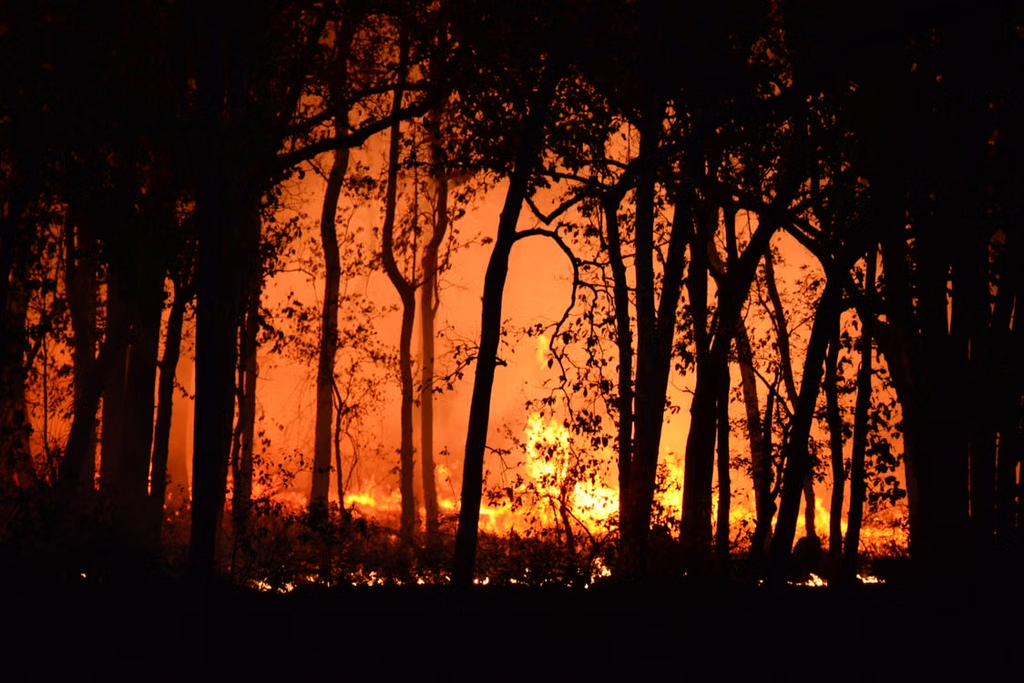
Wildfires do not stop at state borders. Strong winds, dry vegetation, and changing weather conditions can carry flames into neighboring states, leaving homeowners, businesses, and entire communities facing devastating losses.
However, when a wildfire crosses state lines, determining legal responsibility becomes more complicated than identifying where the fire started.
For example, imagine a wildfire starts due to poorly maintained electrical equipment in California and spreads into Nevada, destroying homes and forcing residents to evacuate. Victims may need to determine in which jurisdiction they can sue: California, Nevada, or another appropriate one.
Several questions can influence their claims:
- Jurisdiction: Which courts have the authority to hear this lawsuit?
- Applicable law: Which state’s negligence and liability rules govern the claims?
- Compensation: Could differences in state law affect the damages that victims can recover?
- Filing deadlines: Which statutes of limitations apply to injuries and property losses?
- Evidence: How can investigators prove the link between the initial ignition and damage that occurred across state lines?
These issues can affect how victims pursue compensation, particularly when multiple defendants, insurance companies, or jurisdictions are involved.
Adamson Ahdoot’s California wildfire attorneys can evaluate potential third-party liability, review the circumstances of a cross-border wildfire, and help identify appropriate legal options.
How Does Jurisdiction Affect Multi-State Wildfire Lawsuits?
When a wildfire affects multiple states, the first important step is determining where victims can file a lawsuit. The appropriate court may depend on where the fire originated, where the losses occurred, and the defendants’ connections to each state.
Three concepts help determine where a case can proceed.
| Legal Concept | What It Determines | Why It Matters |
|---|---|---|
| Personal Jurisdiction | Whether a court has authority over a defendant. | Determines where a utility or another defendant may be sued. |
| Subject Matter Jurisdiction | Whether a court can hear a particular type of case. | Helps establish whether a claim belongs in state or federal court. |
| Venue | The appropriate geographic location for the lawsuit. | Helps determine where proceedings should take place. |
1. Personal Jurisdiction
Personal jurisdiction determines if a court has the legal authority to try a specific defendant.
For instance, if a California utility company’s equipment starts a wildfire that destroys property in Nevada, victims cannot automatically sue the company in a Nevada court simply because their losses occurred there.
Instead, courts must consider the utility’s connections to the state and whether the claims arise from or relate to its activities there.
The U.S. Supreme Court established foundational principles for personal jurisdiction in International Shoe Co. v. Washington (1945). More recently, in Ford Motor Co. v. Montana Eighth Judicial District Court (2021), the Court clarified how a defendant’s activities within a state may support jurisdiction over related claims.
2. Subject Matter Jurisdiction
Subject matter jurisdiction determines whether a court has the authority to hear a particular type of case.
Wildfire lawsuits may proceed in state courts or, when federal jurisdictional requirements are met, in federal courts.
According to 28 U.S.C. § 1332, federal diversity jurisdiction typically requires that there be complete diversity of citizenship between opposing parties and that the amount in controversy exceed $75,000, excluding interest and costs.
However, a wildfire that crosses state borders does not automatically qualify a lawsuit for federal court.
3. Venue
Venue determines the appropriate geographic location for litigation within a court system.
In federal civil cases, 28 U.S.C. § 1391 usually takes into account factors such as where the defendants live, where the events that led to the lawsuit occurred, and where the property involved in the dispute is located.
Even when a court has jurisdiction over a wildfire lawsuit, additional rules determine if it is the proper location for the proceedings.
Identifying the appropriate court early on can help victims avoid procedural disputes, unnecessary delays, and the potential dismissal of their claims.
Which State’s Laws Apply When a Wildfire Crosses Borders?
One major challenge in interstate wildfire litigation is determining which state’s laws apply. States may have different rules for establishing negligence, assigning liability, and calculating compensation.
Consequently, the location of the wildfire, the defendants’ actions, and the affected properties may influence how individual claims are evaluated.
Does the State Where the Fire Started Control the Lawsuit?
Not necessarily.
The location of ignition is important, but it does not automatically determine which state’s substantive law applies.
Courts apply choice-of-law rules to determine which state’s laws govern particular issues.
California generally follows a governmental interest analysis when conflicting state laws may apply. Under this approach, courts examine:
- Whether the states’ relevant laws differ.
- Whether each state has a legitimate interest in applying its law.
- Which state’s interests would be more impaired if its law were not applied.
This analysis may result in multiple state laws governing separate issues within the same lawsuit.
For example, a court may need to evaluate liability and available damages under different legal rules, depending on the circumstances and applicable choice-of-law principles.
How Can State Laws Affect Compensation?
Differences between state laws may influence the outcome of a wildfire claim, including:
- Standards for establishing negligence
- Comparative fault rules
- Available property damage remedies
- Recovery of non-economic damages
- Statutes of limitations
- Certain statutory liability claims
In California, Civil Code § 1714 establishes the general duty to exercise ordinary care.
Additionally, Health and Safety Code § 13007 addresses liability for certain fires negligently, unlawfully, or willfully set or allowed to escape.
However, these provisions do not automatically apply to damage occurring outside California.
An attorney can evaluate laws, identify potential grounds for liability, and determine how state differences may affect a victim’s right to compensation.
Can Utilities Operating Across State Lines Be Held Liable?
Yes, when the applicable legal requirements are satisfied.
Electric utilities may operate infrastructure near state boundaries or participate in interconnected electrical systems extending across multiple jurisdictions.
However, operating across multiple states does not automatically establish liability. Victims must generally demonstrate that the utility breached an applicable legal duty and that its conduct caused recoverable harm. The specific requirements depend on the governing law and the claims involved.
How Do Attorneys Identify the Responsible Utility?
Identifying a potentially responsible utility requires examining the fire’s origin, the equipment involved, and the companies responsible for its operation and maintenance.
Investigators may examine:
- Ownership of electrical equipment
- Transmission and distribution infrastructure
- Inspection and maintenance records
- Vegetation management documentation
- Equipment failure reports
- Operational responsibilities
- Fire origin and cause findings
A utility’s responsibility generally depends on its conduct, duties, and connection to the ignition.
For example, if negligent maintenance of electrical equipment contributes to a wildfire that subsequently spreads into another state, the resulting damage may raise questions about the geographic scope of the utility’s liability.
Can Multiple Utilities Share Responsibility?
Yes. Under applicable law, multiple utility companies may share liability if evidence establishes that their respective conduct contributed to the ignition or spread of a wildfire.
For instance, one company may own electrical infrastructure while another operates or maintains certain equipment. Investigators must examine each entity’s responsibilities and actions to determine whether either contributed to the disaster.
Nevertheless, equipment ownership or proximity to the wildfire alone does not constitute negligence.
Other potentially liable parties may include contractors, equipment operators, or businesses whose actions contributed to the fire.
When multiple defendants are involved, the state’s laws may also determine how responsibility is allocated and whether victims can recover damages from more than one party.
How Do Attorneys Coordinate Multi-State Wildfire Litigation?
Coordinating multi-state wildfire lawsuits requires managing evidence, legal procedures, and potentially overlapping claims across jurisdictions.
Attorneys may work with local counsel, technical experts, and other litigation teams to investigate the fire and establish liability.
Coordinating Investigations
Wildfire investigations frequently involve physical evidence collected from several locations.
Attorneys may coordinate with fire origin investigators, electrical engineers, meteorologists, and other specialists to reconstruct ignition and fire spread. The investigation must distinguish between the original cause of the wildfire and the conditions that influenced its progression.
Managing Discovery Across Jurisdictions
During discovery, attorneys obtain and exchange evidence relevant to the lawsuit. In cross-border wildfire cases, important documents, witnesses, and physical evidence may be located in other states.
Obtaining this information may require compliance with different procedural rules, including those governing subpoenas and testimony from out-of-state witnesses.
Coordinating these efforts can help legal teams develop a clearer understanding of how the wildfire occurred and which parties may be responsible.
Coordinating Related Lawsuits
A single wildfire can generate numerous lawsuits involving victims, defendants, and jurisdictions.
When related federal cases involve similar factual issues, 28 U.S.C. § 1407 permits qualifying cases to be transferred for coordinated or consolidated pretrial proceedings through multidistrict litigation (MDL).
MDL can streamline certain aspects of litigation, including discovery and pretrial motions, while preserving the individual nature of the underlying claims.
However, MDL is not automatic, and coordinated proceedings do not guarantee that every lawsuit will be resolved through a single trial. State courts may also have separate procedures for coordinating related cases.
For victims considering legal action, Adamson Ahdoot explains additional procedural considerations in its guide to filing a wildfire lawsuit in California.
What Evidence Is Needed in Cross-Border Wildfire Lawsuits?
In cross-border wildfire lawsuits, establishing liability requires evidence connecting a defendant’s actions to the fire and its resulting injuries or property damage.
In the case of a wildfire affecting multiple states, investigators must document the fire’s origin, how it spread, and where individual losses occurred.
Fire Origin and Spread Evidence
To determine where the wildfire began and how it spread across state borders, investigators may use different sources:
- Satellite imagery and fire maps to track the wildfire’s progression.
- Weather records to examine wind patterns and conditions.
- Witness statements to document how the fire developed.
- Physical evidence and investigation reports to identify potential ignition sources.
Utility and Contractor Records
When electrical infrastructure or contractor activities may have contributed to the fire, the following records are relevant:
- Inspection and maintenance reports.
- Equipment ownership and repair records.
- Vegetation management documentation.
- Internal communications and operational records.
Medical and Property Damage Documentation
Victims should preserve medical records, treatment expenses, photographs, repair estimates, property inventories, insurance documents, and receipts for evacuation or temporary housing.
These records should clearly indicate the date and location of each loss. Additional evidence may be necessary to identify the cause of specific injuries.
For practical guidance, read Adamson Ahdoot’s article on preserving wildfire evidence immediately after a fire.
What Legal Risks Should Victims Consider Before Filing?
A wildfire lawsuit involving multiple states requires careful consideration of jurisdiction, applicable laws, and procedural deadlines. Errors in these areas may delay proceedings or jeopardize a victim’s ability to seek compensation.
Different Filing Deadlines
California Code of Civil Procedure § 335.1 generally provides two years for personal injury claims, while § 338 establishes three years for certain property damage claims.
However, deadlines may differ depending on:
- The state laws applicable to the claim.
- The type of injury or property damage.
- Exceptions, tolling rules, or borrowing statutes.
- Whether a government entity is involved.
Did You Know?
Just because you file a wildfire lawsuit in one state does not mean that state’s filing deadlines automatically apply. Depending on the circumstances, courts may need to consider choice-of-law rules, borrowing statutes, and exceptions affecting the time available to bring a claim.
Filing in an Inappropriate Court
Filing a lawsuit in a court without proper jurisdiction may result in dismissal or transfer, which can cause delays and additional expenses. These complications can also pose risks when filing deadlines are approaching.
Conflicting Liability Standards
States may apply different rules for negligence, causation, comparative fault, and recoverable damages.
These differences can affect how responsibility is established and the compensation available to victims.
When Should Wildfire Victims Contact an Attorney?
Victims should consider legal guidance when a wildfire crosses state borders, when responsible parties operate in multiple jurisdictions, or when injuries and property damage occur outside the ignition state.
A California personal injury attorney experienced in wildfire litigation can assess potential claims and determine whether coordination with attorneys licensed in other states is necessary.
Seeking guidance early can help victims protect important evidence, understand applicable filing deadlines, and avoid procedural mistakes that could affect their claims.
Expert Tips for Victims of Multi-State Wildfires
2. Preserve Official Fire Information. Save incident reports, evacuation notices, and publicly available fire progression maps that may help establish the wildfire’s timeline.
3. Identify Potentially Responsible Parties. Keep relevant utility notices, contractor information, and public investigation updates without assuming that any particular entity caused the fire.
4. Avoid Relying on One State’s Filing Deadlines. Different claims may be subject to different limitation periods, making early legal review essential.
5. Seek Attorneys Familiar With Coordinated Litigation. Cross-border claims may require collaboration among lawyers, technical experts, and courts in different jurisdictions.
Frequently Asked Questions
Potentially. The court must have jurisdiction over the utility, and the claim must satisfy the applicable requirements.
The answer depends on the relevant choice-of-law rules, the parties, and the legal issues involved. The ignition state does not automatically control every claim.
Yes, if evidence establishes that their respective conduct contributed to the wildfire under applicable liability principles.
No. Federal jurisdiction requires an independent legal basis, such as qualifying diversity jurisdiction or a federal question.
Some related cases may qualify for coordination, consolidation, or federal multidistrict litigation. Eligibility depends on procedural requirements and the circumstances.
You may still have options, but jurisdiction, venue, law, and filing deadlines require careful evaluation.
Yes. Recoverable damages may differ based on individual losses, applicable law, available evidence, and each claimant’s circumstances.
Protecting Your Rights After a Wildfire Crosses State Borders
When a wildfire causes damage across state lines, understanding your legal options can be challenging. Different laws, filing deadlines, and potentially responsible parties may affect your ability to pursue compensation.
At Adamson Ahdoot, our attorneys can evaluate your situation, investigate potential third-party liability, and determine the best strategy.
If you or a loved one suffered injuries or property damage, call (866) 645-4992 for a free consultation or contact us through our online form.
With over 100 years of combined legal experience, our team is committed to protecting victims’ rights and helping them pursue the compensation they deserve.
References
- California Legislative Information: Civil Code § 1714 — California’s general duty of ordinary care.
- California Legislative Information: Health and Safety Code § 13007 — Liability involving certain negligently, unlawfully, or willfully caused fires.
- California Legislative Information: Code of Civil Procedure § 335.1 — General limitations period for personal injury actions.
- California Legislative Information: Code of Civil Procedure § 338 — Limitations periods for specified claims, including certain property damage actions.
- United States Code: 28 U.S.C. § 1332 — Federal diversity jurisdiction.
- United States Code: 28 U.S.C. § 1407 — Multidistrict litigation procedures.
- U.S. Supreme Court: International Shoe Co. v. Washington (1945) — Foundational personal jurisdiction principles.
- U.S. Supreme Court: Ford Motor Co. v. Montana Eighth Judicial District Court (2021) — Specific personal jurisdiction and claims related to forum-state activities.
- California Supreme Court: McCann v. Foster Wheeler LLC (2010) 48 Cal.4th 68 — California choice-of-law principles.